Serving Edmonton for over 120 years

Earwigs

Identification

Size: 12–15 mm long
Color: Reddish-brown with yellowish legs
Description: Earwigs are nocturnal, pincer-tailed insects that feed on organic matter, decaying plant material, and occasionally live plants. Though mostly harmless, large populations can damage garden seedlings, flowers, and soft fruits.

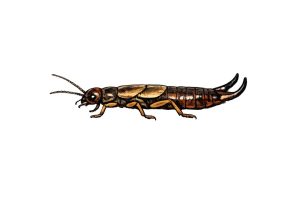
Earwigs (order Dermaptera) are elongated, flattened insects instantly recognizable by the prominent pincers (cerci) at the tip of their abdomen. Despite longstanding folklore, earwigs do not crawl into ears. In Alberta, the European Earwig (Forficula auricularia) is the species most commonly encountered.

Earwigs are primarily scavengers and decomposers, playing a beneficial role in breaking down organic matter and feeding on small pest insects, such as aphids. However, when populations build up — particularly in warm, moist conditions — they can cause visible damage to young seedlings, soft fruits such as strawberries, and delicate flowers.

They are nocturnal and spend the day sheltering under mulch, leaf litter, boards, flowerpots, and other debris. They may enter homes through foundation cracks, particularly during hot, dry weather or heavy rain, but they do not breed indoors and are not a structural pest.

European Earwigs are 12–15 mm long, reddish-brown, and have a distinctive pair of pincers (cerci) at the rear of the abdomen. The pincers are curved in males and straighter in females. They have wings tucked beneath short forewings but rarely fly.

Key identification features:

  • Flat, elongated body, reddish-brown to dark brown in colour
  • Prominent forcep-like pincers at the tail end — the most recognizable feature
  • Six yellowish legs
  • Active at night; found in groups under garden debris, mulch, or pots during the day

  • Ragged, irregular holes chewed in leaves, flower petals, and soft fruits
  • Damage concentrated on low-growing plants, seedlings, and new growth
  • Earwigs found sheltering under mulch, boards, stepping stones, or pots when lifted
  • Chewed or hollowed-out strawberries, stone fruits, or corn silks
  • Slimy or frass-streaked damage on fruit surfaces
  • Groups of earwigs are discovered near garden beds at night with a flashlight
  • Keep mulch, debris, and organic material away from building foundations and garden bed edges
  • Water gardens in the morning so the soil surface dries by evening — earwigs prefer moist conditions
  • Seal foundation cracks, gaps around pipes, and other entry points to reduce access to structures
  • Use earwig traps: rolled newspaper, cardboard tubes, or shallow containers of vegetable oil placed at soil level overnight, discarded each morning
  • Apply a barrier of food-grade diatomaceous earth around the base of vulnerable plants
  • Encourage natural predators — ground beetles, birds, and toads all feed on earwigs

BIRCH FUMIGATORS

est. 1900

Don't Let Bugs Get the Best of You

BIRCH FUMIGATORS

est. 1900

Don't Let Bugs Get the Best of You