
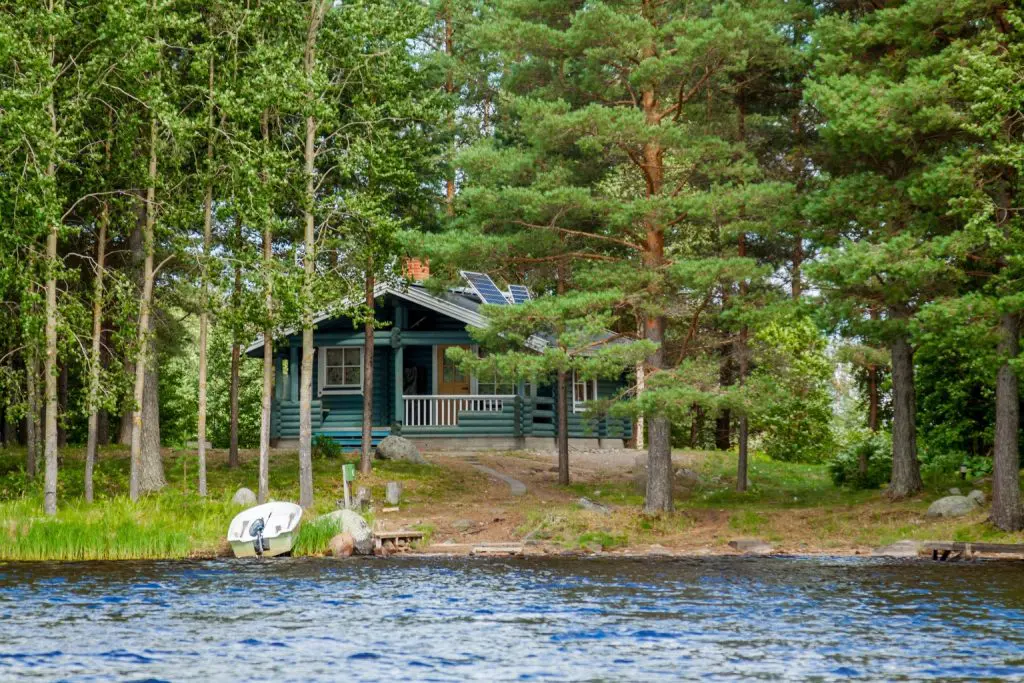
Alberta’s lake country, including Pigeon Lake, Sylvan Lake, Lac Ste. Anne, and Wabamun, fills up with cabin owners and cottagers every summer. But a property that sits empty for stretches at a time, surrounded by trees and water, is exactly the kind of place pests look for. Add in a summer with well above normal rainfall, and the moisture-loving pests that already gravitate to cabin country have even more reason to move in. Here is what to watch for and how to keep your cabin pest-free this season.
Why Cabins and Cottages Are Pest Magnets
- Seasonal vacancy gives pests quiet, undisturbed time to nest and settle in
- Older wood construction, gaps, and uninsulated crawlspaces are easy to get into
- Proximity to water, forest, and long grass means more insects and wildlife nearby to begin with
- Food and garbage left behind between visits is an easy meal for rodents and ants
Common Summer Cabin Pests in Alberta
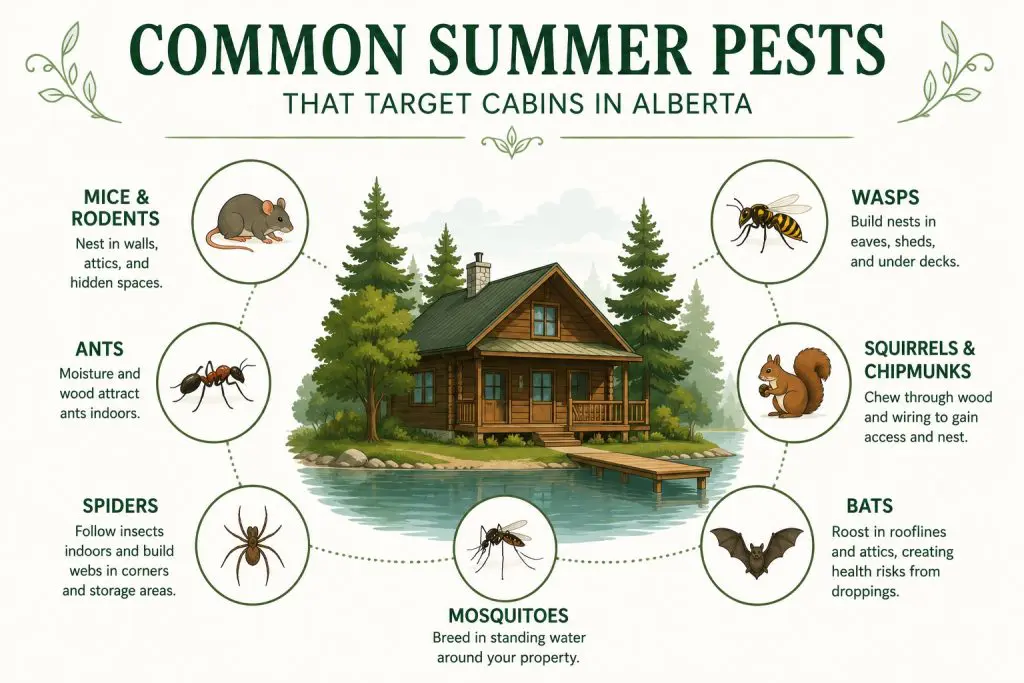
Mice and other rodents: Mice look for quiet, undisturbed buildings with easy access to food, which makes an empty cabin an easy target. Once inside, they nest in wall voids and attics and chew through insulation, wiring, and stored linens.
Wasps: Wasps often build nests in eaves, sheds, and under decks, and they favour dry, sheltered spots even more during a wet summer when the ground stays damp. A single nest can grow to hundreds of wasps by late summer, which makes removal riskier the longer it goes unnoticed.
Ants, including carpenter ants: Moisture around foundations, decks, and stacked woodpiles draws ants indoors, and carpenter ants in particular will tunnel into damp or damaged wood to build their nests. Left alone, they can weaken structural timber over a season or two.
Spiders: Cabins near water and forest attract large numbers of flying insects, and spiders follow that food source indoors. Webs tend to show up in corners, window frames, and storage areas that go unused between visits.
Squirrels and chipmunks: Squirrels and chipmunks look for attic and soffit gaps as entry points, then chew through wood and wiring to expand their access. Once inside, they can damage insulation and electrical wiring in a short amount of time.
Bats: Bats roost in rooflines and attic spaces near lakes and forested areas, especially in older cabins with small gaps under the eaves. A colony can grow quickly over a season, and the droppings left behind create a health hazard that needs proper cleanup.
How This Summer’s Rain Changes the Picture
- Excess moisture around foundations and woodpiles increases carpenter ant activity, especially where firewood is stacked directly against the building
- Standing water near the cabin adds to mosquito numbers, making decks and docks less enjoyable to use
- Saturated ground pushes rodents and insects toward dry, elevated shelter, which often means your cabin looks more appealing than the yard around it
A Pre-Season and Between-Visit Checklist
- Inspect the exterior for new gaps, holes, or chew marks before settling in for the weekend
- Check eaves and soffits for wasp nests before they grow to a size that requires professional removal
- Seal entry points around pipes, vents, and rooflines
- Store food in hard, sealed containers and avoid leaving anything scented in cupboards between visits
- Move firewood away from the building and off the ground
- Trim trees and shrubs back from the roofline and exterior walls
- Empty any standing water sources near the cabin, including buckets, tarps, and boat covers
What to Do If You Arrive and Find an Infestation
Do not attempt to knock down or spray a large wasp nest yourself, particularly if it is in an awkward spot like a roofline or soffit, since disturbed nests can lead to serious stings. If you find rodent droppings or nesting material, ventilate the area before cleaning and avoid direct contact, and have a professional handle larger amounts. If ants, spiders, or rodent activity keeps returning despite your best efforts between visits, it is a sign the infestation is more established than a quick cleanup can fix.
Protecting Your Getaway All Season Long
A cabin you only visit every week or two needs pest control that works while you are away, not just when you notice a problem. Birch Fumigators offers seasonal inspections and treatment plans built for lake properties and acreages across the Edmonton area and beyond, so your cabin stays protected between visits.
Planning to spend the summer at the lake? Contact Birch Fumigators to set up a seasonal inspection or treatment plan for your cabin or cottage.