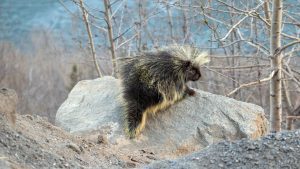
Porcupines typically prefer to avoid confrontation, but they can display signs of aggression if they feel threatened or cornered. Here are some indicators that a porcupine might be getting aggressive or feeling defensive:
- Raising Quills: The most noticeable sign of a porcupine preparing to defend itself is the raising of its quills. When a porcupine feels threatened, it will puff up its quills to appear larger and more intimidating to potential predators.
- Chattering Teeth: Porcupines might chatter their teeth as a warning signal when they feel threatened. This sound is meant to deter potential threats from approaching further.
- Stomping Feet: A porcupine may stomp its feet to make noise and threaten any perceived threats. This behaviour is also a warning sign that it is feeling distressed or defensive.
- Hissing or Grunting: Emitting a hissing or grunting sound is another defensive tactic used by porcupines. These sounds serve as a warning to back off before the situation escalates to the use of quills.
- Tail Flicking: If further provoked, a porcupine might flick its tail as a prelude to launching its quills. This swift movement is a clear sign that the porcupine is ready to defend itself.
- Aggressive Posturing: A porcupine might adopt an aggressive posture by arching its back, lowering its head, and turning its backside towards the threat to position its quills for defence.
If you notice any of these behaviours, keeping your distance is important. Porcupines will generally not attack unless they feel there is no other option. They prefer to have an