
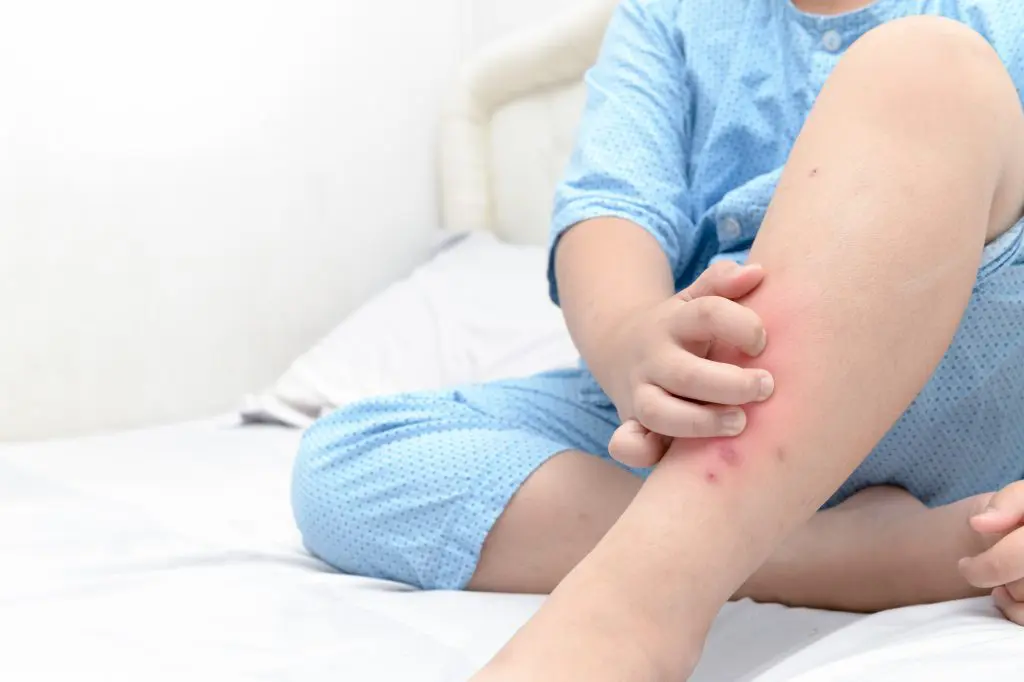
Bed bug bites can appear in lines, rows, or clusters because a bed bug may feed multiple times while moving across exposed skin. Multiple bed bugs feeding in the same area can also create groups of bites. However, a line of red, itchy bumps does not automatically mean you have bed bugs.
Bed bug bites can resemble bites from fleas, mosquitoes, and other insects, and people react differently to them. The best way to confirm a bed bug problem is to look for the bugs themselves or other physical signs around your bed and sleeping area.
In Alberta, bed bugs can be found in houses, apartments, hotels, shelters, and other places where people sleep. They can hitchhike into a property on luggage, clothing, furniture, boxes, and other belongings. Alberta Health’s bed bug information notes that bed bugs are particularly associated with places where many people come and go.
Why Do Bed Bug Bites Form Lines or Clusters?
Bed bugs feed on blood, usually while a person is sleeping. A bed bug may feed more than once, which can produce several bites relatively close together.
Research published by the CDC has described small clusters of itchy, red bumps caused by repeated feeding by a single bed bug. The CDC also notes that bed bug bites may appear randomly or in a straight line.
You may also have several bed bugs feeding on exposed skin during the same night, creating a cluster rather than a neat line.
You may have heard the three-bite line described as “breakfast, lunch, and dinner.” While this is a popular nickname for the pattern, don’t rely on three bites in a row as proof that bed bugs are present. Bed bug bites do not always occur in groups of three, and other insects can cause similar-looking skin reactions.

What Do Bed Bug Bites Look Like?
Bed bug bites can look different from one person to another.
According to the CDC’s bed bug guidance, some people develop no visible reaction at all, while others develop small bite marks. Rarely, people can experience more serious allergic reactions.
When a reaction does occur, you may notice:
- small, swollen red marks
- itchy or irritated skin
- several bites grouped together
- bites arranged in a row or line
- bites on skin that was exposed while sleeping
Common locations include the face, neck, arms, hands, shoulders, and other exposed areas.
Another complication is timing. Bite marks don’t necessarily appear the morning after you were bitten. The CDC says marks may appear from one to several days after the initial bite, and in some people, they may take up to 14 days to develop.
That makes it difficult to determine exactly when or where you encountered bed bugs based only on your skin.
Do Bed Bug Bites Always Appear in a Straight Line?
No. Bed bug bites do not always form a straight line.
They may appear in a line, cluster, or seemingly random pattern. Some people may not develop visible marks at all.
This is one reason Birch Fumigators doesn’t recommend identifying a bed bug infestation from bite patterns alone.
A line of bites is a clue worth investigating, but finding physical evidence around your sleeping area provides much stronger evidence of an infestation.
Can You Tell Bed Bugs From Bites Alone?
No. You generally cannot confirm bed bugs based solely on what a bite looks like.
The CDC states that the inflammatory reaction caused by bed bug bites is not specifically diagnostic for bed bugs. Confirmation is best achieved by finding adult bed bugs or nymphs around the area where the person sleeps.
This distinction is important because several insects and skin conditions can cause red or itchy marks.
Instead of focusing only on your skin, inspect your sleeping area for physical signs of bed bugs.
How Can You Tell If You Actually Have Bed Bugs?
Start close to where you sleep.
Alberta Health recommends inspecting the mattress, box spring, bed frame, headboard, nearby furniture, baseboards, wall hangings, cracks, and crevices. If you find evidence, continue inspecting outward to determine how far the bed bugs may have spread.
Signs to watch for include:
- Live bed bugs: Check mattress seams, the box spring, bed frame, and headboard.
- Shed skins: Bed bugs shed their exoskeletons as they develop.
- Blood spots: Small rusty or reddish stains may appear on bedding or mattresses.
- Dark spots: Bed bug waste may leave dark marks around hiding areas.
- A sweet odour: Alberta Health notes that larger numbers of bed bugs can produce an odour from their scent glands.
Use a flashlight when inspecting small cracks and dark areas.
Alberta Health provides detailed instructions for finding bed bugs, including where to inspect around beds and furniture.
Where Do Bed Bugs Hide During the Day?
Bed bugs typically hide during the day and become active at night.
Around a bed, check:
- Mattress seams and piping: Small seams provide narrow hiding places close to a sleeping person.
- Box springs: Inspect all sides, including underneath.
- Bed frames and headboards: Look around joints, screw holes, cracks, and the back of the headboard.
- Nightstands and bedroom furniture: Check drawer runners, joints, undersides, and crevices.
- Baseboards and trim: Bed bugs can hide in narrow gaps around a room.
- Wall decorations: Look behind pictures and other objects hanging near the bed.
Alberta Health also advises checking small objects such as books, clocks, and toys.
Are Bed Bug Bites Dangerous?
Bed bugs are not known to spread disease to people. However, that doesn’t mean bites should simply be ignored.
Bites can cause significant itching in some people. Scratching can break the skin and potentially lead to a secondary infection. Some people may also experience an allergic reaction. Bed bug infestations can additionally contribute to sleep loss and anxiety.
If you develop signs of infection, a significant allergic reaction, or another concerning reaction, contact a healthcare professional rather than assuming it is a normal response to bed bug bites.
What Should You Do If You Think You Have Bed Bugs?
Don’t start moving furniture, bedding, or other belongings into other rooms.
Bed bugs cannot fly, but they can crawl between rooms and suites. They can also travel much farther when people unknowingly move infested clothing, furniture, luggage, boxes, or other belongings. This is particularly important in Edmonton apartments and other multi-unit buildings, where bed bugs can move between suites.
If you suspect an infestation:
- Inspect the sleeping area. Look for live bugs and other physical evidence.
- Avoid moving potentially infested belongings. Moving items around the home can help spread the infestation.
- Use your dryer appropriately. Alberta Health says the heat from a hot dryer can kill all stages of bed bugs and recommends drying appropriate bedding and clothing on high heat for 30 minutes.
- Vacuum carefully. Pay particular attention to cracks, mattress surfaces, the bed frame, and other hiding areas. Dispose of the vacuum contents outside.
- Contact a pest control professional. Bed bug infestations can be difficult to eliminate without a coordinated treatment plan.
Can You Get Rid of Bed Bugs Yourself?
Bed bugs are particularly challenging DIY pests because they can hide in extremely small spaces and spread beyond the mattress.
Alberta Health describes treating an infestation as a process requiring several measures at the same time, including pest control treatment, decluttering, cleaning, laundry, isolating cleaned belongings, and protecting the sleeping area.
Chemical treatment is best performed by a pest control professional. Alberta Health also warns that incorrectly using insecticides can cause bed bugs to move to another area and that some products are available only to licensed pest control operators.
Professional bed bug control may include chemical treatments, heat treatment, monitoring, or a combination of methods depending on the property and extent of the infestation.
Does Alberta’s Cold Weather Kill Bed Bugs?
Don’t count on an Edmonton winter to solve an indoor bed bug infestation.
Bed bugs live indoors, where heated homes and apartment buildings protect them from Alberta’s outdoor winter temperatures. Simply putting an infested mattress or piece of furniture outside is not a reliable replacement for a properly managed treatment program.
Alberta Health instead recommends an integrated approach involving professional pest control, cleaning, laundry, isolation, and ongoing inspection.
Frequently Asked Questions About Bed Bug Bites
Why do bed bug bites appear in a row?
A bed bug may feed repeatedly while moving across exposed skin, which can result in several bites relatively close together. Bed bug bites can appear in straight lines, but they can also occur in clusters or random patterns.
Are three bites in a row always bed bugs?
No. Three bites in a row are sometimes nicknamed “breakfast, lunch, and dinner,” but this pattern cannot confirm bed bugs. Look for live bed bugs, shed skins, blood spots, dark waste spots, and other physical evidence around the sleeping area.
How soon do bed bug bites appear?
Reactions vary. The CDC says most people don’t notice bite marks until one to several days after the bite, and marks can take as long as 14 days to appear in some people.
Can you have bed bugs without getting bites?
You can have bed bugs without developing visible bite marks. Some people have no physical signs after being bitten, making inspection of the sleeping area particularly important.
Where do bed bugs usually bite?
Bed bug bites commonly occur on exposed skin while you’re sleeping, including the face, neck, arms, hands, and shoulders. However, the location of a skin reaction alone cannot confirm bed bugs.
Do bed bugs spread disease?
Bed bugs are not known to transmit disease to people. Their bites can still cause itching, allergic reactions, sleep disruption, and secondary skin infections caused by scratching.
Bed Bug Control in Edmonton
If you’re waking up with unexplained bites in lines or clusters, don’t rely on the bite pattern alone to determine whether you have bed bugs. Look for physical evidence around your mattress, box spring, bed frame, headboard, and nearby furniture.
Birch Fumigators provides professional bed bug inspections and pest control in Edmonton and surrounding communities. We can help identify the pest you’re dealing with, determine the extent of the problem, and recommend an appropriate treatment approach.
Birch also offers free pest identification, so if you’ve found a bug but aren’t sure whether it’s a bed bug, contact Birch Fumigators before assuming what you’re dealing with.