

If you find bed bugs in your Edmonton home, acting quickly can help prevent the infestation from spreading. Getting rid of bed bugs typically involves identifying where they are hiding, washing and drying affected fabrics, vacuuming, using heat or steam where appropriate, and treating the infestation. Established infestations can be difficult to eliminate without professional bed bug treatment.
Here’s what to do if you think you have bed bugs.
1. Check for Signs of Bed Bugs
Start by inspecting your mattress, box spring, bed frame, headboard, and furniture near the bed.
Common signs of bed bugs include:
- Live bed bugs
- Small dark or reddish-brown spots on mattresses or bedding
- Tiny pale eggs or eggshells
- Shed bed bug skins
- Bed bugs hiding along mattress seams, cracks, joints, and other small spaces
Bed bugs can spread beyond the mattress, so finding them in one area doesn’t necessarily mean that’s the only place they’re hiding.
2. Vacuum Areas Where Bed Bugs Hide
Thoroughly vacuum your mattress seams, bed frame, baseboards, carpeting, upholstered furniture, and cracks or crevices around the bedroom.
Vacuuming can physically remove some bed bugs and eggs, but it usually won’t eliminate an infestation on its own. Dispose of the vacuum contents carefully after cleaning so captured bed bugs aren’t released elsewhere in your home.
3. Use Steam to Kill Bed Bugs
Steam can kill bed bugs and eggs when the correct temperature and technique are used. It can be useful on mattresses, upholstered furniture, bed frames, baseboards, and other suitable surfaces.
Move the steamer slowly and follow the manufacturer’s instructions. Avoid using steam on materials or electrical components that could be damaged by heat or moisture.
4. Wash and Dry Bedding and Clothing
Wash affected bedding, clothing, and washable fabrics according to their care instructions. Heat from a clothes dryer is particularly useful for killing bed bugs and their eggs.
After drying, place clean items in sealed bags or containers until the infestation has been treated. This helps prevent bed bugs from getting back into freshly cleaned belongings.
5. Reduce Bed Bug Hiding Places
Bed bugs can hide in very small cracks and crevices around beds, baseboards, furniture, and walls.
Reduce clutter around sleeping areas and seal unnecessary cracks or gaps where practical. These steps can make bed bugs easier to detect and reduce potential hiding places, but sealing gaps alone will not eliminate an existing infestation.
When Should You Call a Bed Bug Exterminator?
If you continue finding live bed bugs, eggs, droppings, or other signs after cleaning, or if the infestation has spread beyond one area, it’s time to consider professional treatment.
Bed bugs are notoriously difficult to eliminate because they hide in small spaces and can spread throughout a home or building.
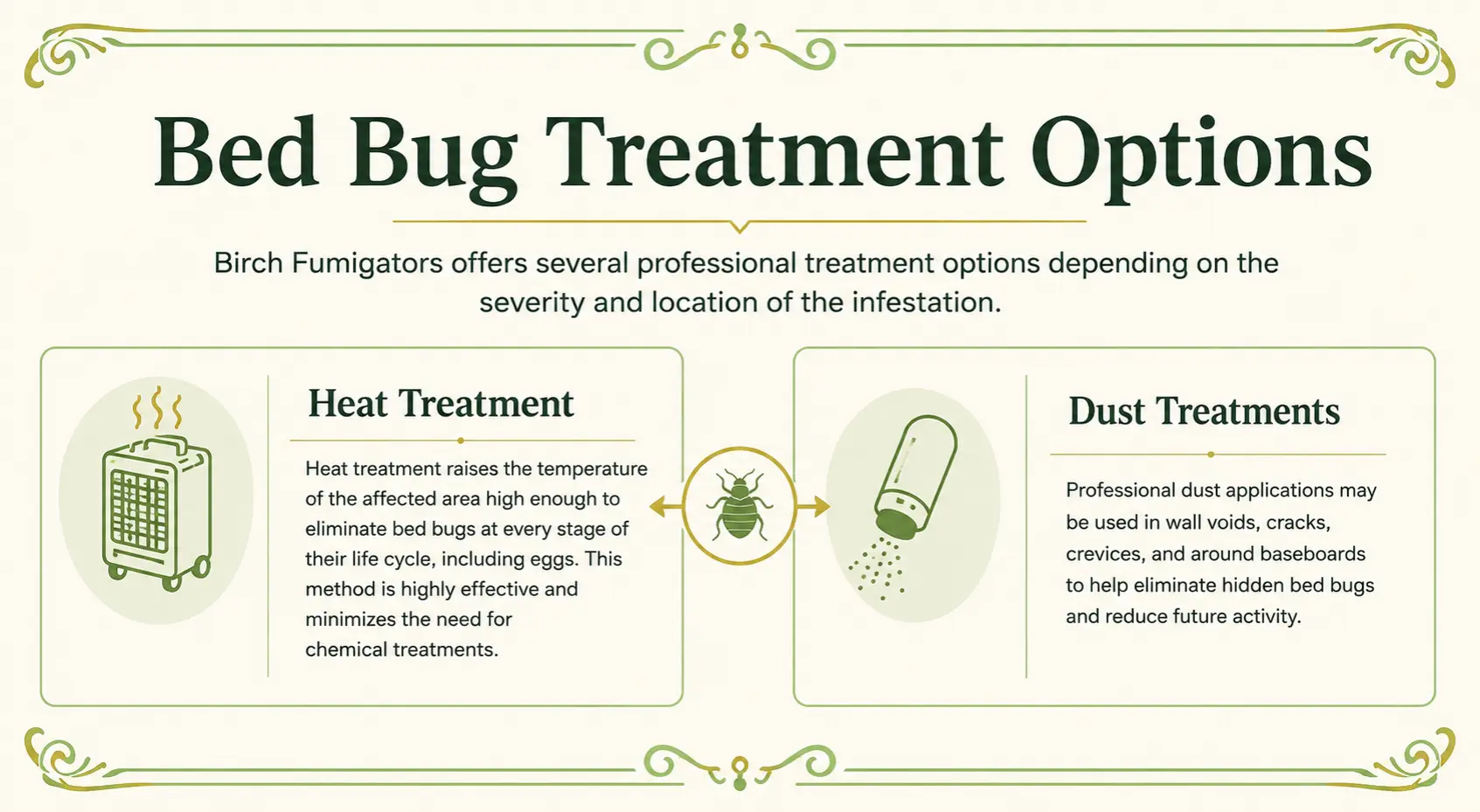
Birch Fumigators provides professional bed bug control in Edmonton, including treatment options based on the extent and location of the infestation. Our team can inspect the property, determine how widespread the problem is, and recommend an appropriate approach.
If you think you have bed bugs, contact Birch Fumigators for help identifying and treating the infestation.