Wasp Season Starts in Spring: Why DIY Wasp Control Fails (And What Actually Works)
When the weather warms up in Edmonton, wasps begin to emerge—and so do the stories. Whether it’s someone spraying wasp nests with hairspray, lighting them on fire, or swinging wildly with a broom, we’ve seen it all. Unfortunately, most of these methods do more harm than good—and can leave you with an even bigger problem by mid-summer.
Understanding the life cycle of a wasp colony is key to effective control. If you act in early spring—before the colony grows—you can avoid months of buzzing, stinging, and stress. Here’s what homeowners need to know about stopping wasps before they take over your yard.
How a Wasp Colony Begins: The Spring Queen
Each spring, a single fertilized queen wasp emerges from hibernation. Her mission? Find a safe, quiet place to build a nest and start laying eggs. That means attics, soffits, sheds, fence posts, or even inside wall voids become prime real estate.
In these early weeks, the queen is building the nest alone. If she’s removed or deterred at this stage, the entire colony never forms.
That’s why April and May are the most critical time to act—long before you see swarms around your patio or children’s play areas.
Why DIY Wasp Control Fails (And Sometimes Makes It Worse)
Homeowners often reach for whatever is nearby or cheap to deal with wasps—but many DIY methods are ineffective, dangerous, or both. Let’s break down the most common ones:
1. Hairspray and Fire
This myth is unfortunately common. It’s not only ineffective—it’s incredibly dangerous. Using an aerosol near an open flame can cause serious injury or property damage.
2. Knocking Down a Nest with a Broom or Stick
Wasps are highly territorial. Attacking a nest without protective equipment or proper technique almost always leads to multiple stings and often doesn’t eliminate the nest entirely.
3. Homemade Wasp Traps
Plastic bottle traps may catch a few wasps, but they won’t stop a growing colony or keep a queen from nesting. These are best seen as minor deterrents, not real solutions.
4. Over-the-Counter Sprays
While they may seem convenient, store-bought wasp sprays can be hazardous to pets, children, and pollinators. They’re also short-term fixes that rarely eliminate the root of the problem.
5. Ignoring the Nest Until It’s Big
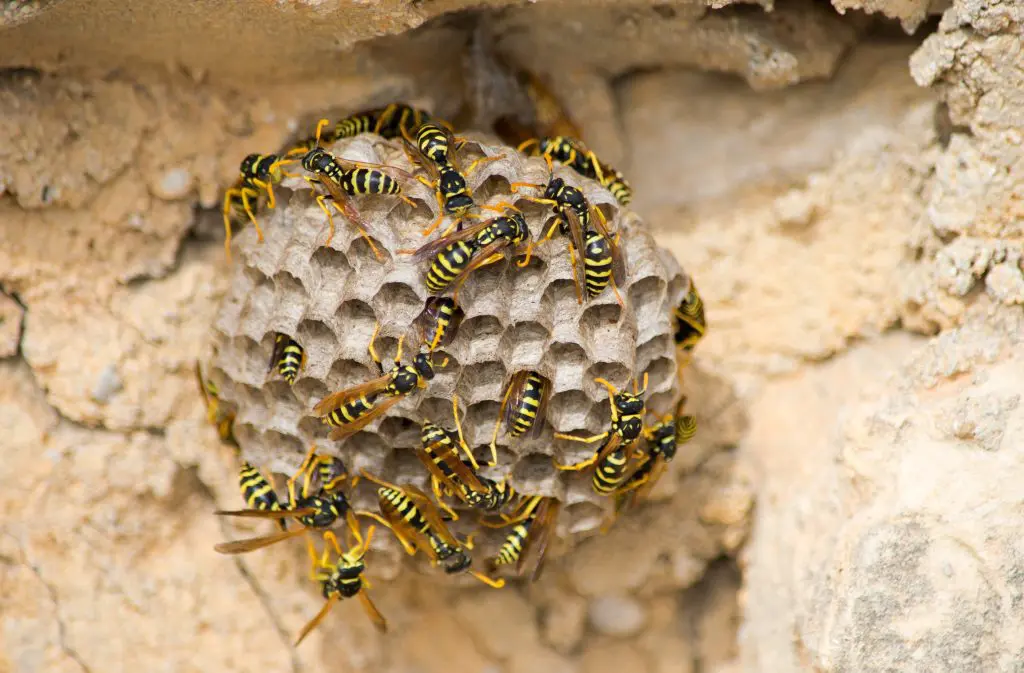
Some homeowners wait to deal with wasps, hoping the problem will disappear on its own. It won’t. By mid-summer, a single nest can house hundreds of wasps, and removal becomes more dangerous and complex.
The Right Way to Deal With Wasps: Early, Safe, and Strategic
At Birch Fumigators, we approach wasp control with seasonal strategy, expert knowledge, and non-toxic products that protect your home without putting your family at risk.
Here’s what works:
-
Spring inspections to identify queen activity and early nests
-
Professional-grade equipment that ensures wasps are removed without agitation
-
Long-term pest management advice tailored to your property (entry points, attractants, landscaping)
If we catch the queens early enough, we can stop wasp problems.
What to Watch for This Spring
-
Wasps hovering around eaves, vents, or sheds
-
Small papery nests (usually golf ball–sized at first) tucked under overhangs
-
Increased wasp activity near windows or attics
-
Buzzing in hard-to-reach areas or walls
If you’re noticing these signs, don’t wait. Early removal is faster, safer, and more cost-effective than waiting until the colony is fully developed.
Book Your Wasp Inspection Today
At Birch Fumigators, we provide expert wasp pest control services in Edmonton and surrounding areas. We use methods that are effective, humane, and non-toxic, so you can enjoy your summer without worrying about swarms, stings, or safety.
Contact us today to schedule a spring inspection and stop wasps before they start. It’s the smart, safe way to reclaim your space—before they take over.